Dental No-Show Cost Calculator: What Empty Chairs Really Cost in 2026
Each empty dental chair costs $200–$375. Run the no-show math for your clinic, see the $8,750–$20,000 monthly drain, and cut it 30–70% with reminders.
Quick answer
A typical dental practice loses $8,750–$20,000 per month to no-shows when 15–20% of appointments go empty. Each missed slot costs $200–$375 in production. Automated WhatsApp or SMS reminders and waitlist backfills can cut no-show rates 30–70% within 60 days.
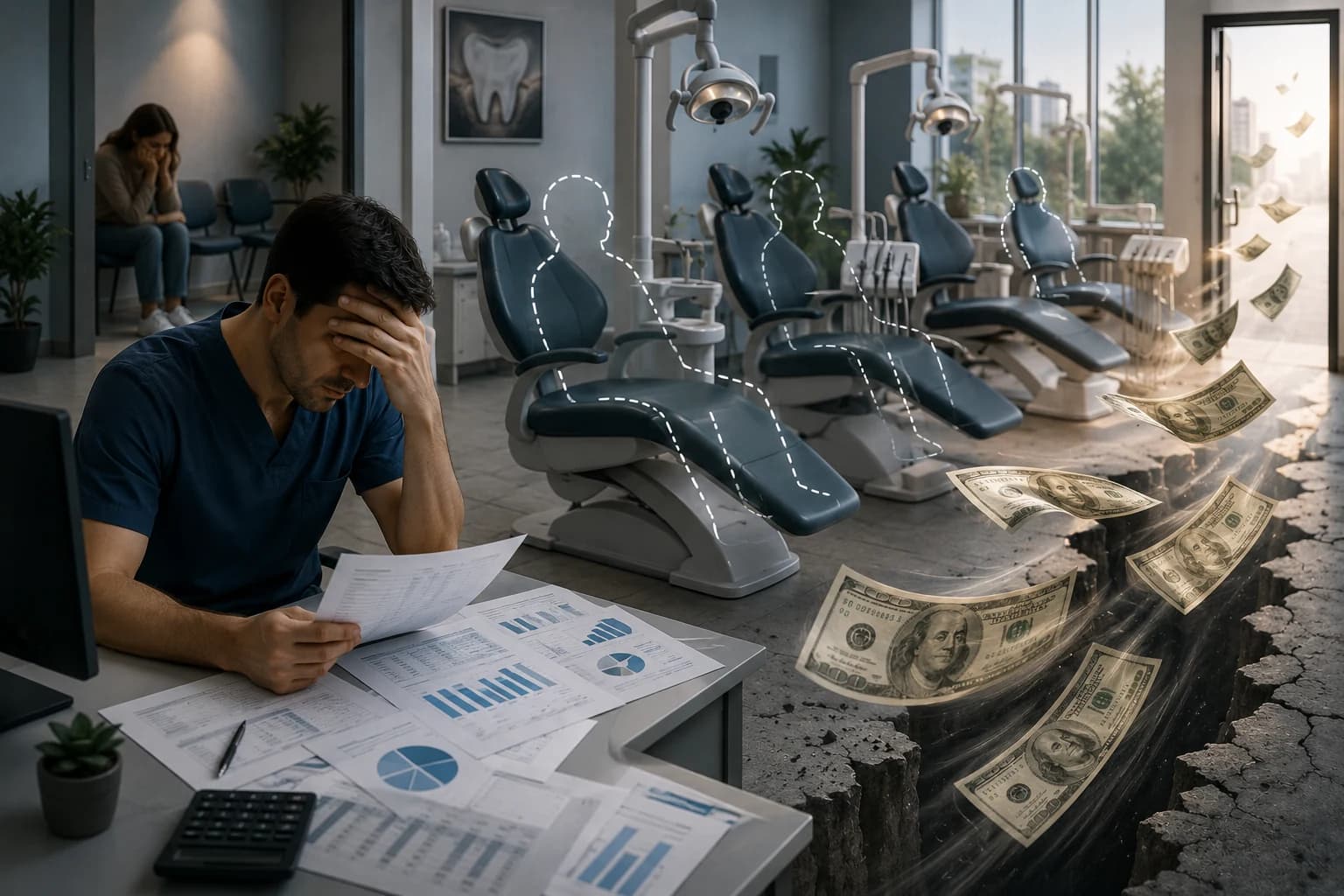
Empty chairs aren't just inconvenient. They're bleeding your practice dry. The average dental practice loses between $105,000 and $240,000 annually to patient no-shows and last-minute cancellations. That's $8,750 to $20,000 every single month walking out the door before patients even walk in.
If you're running 30–40 appointments daily with a typical 15–20% no-show rate, you're losing 4–6 appointments every day. At $200–$375 per missed appointment, that's $2,000–$3,000 in lost production each day that can never be recovered.
This guide breaks down the real cost of no-shows, why they happen, and proven strategies that cut no-show rates by 30–70% within 60 days. Modern dental software with automated reminders is the fastest lever — see also 7 Major Problems Every Dental Clinic Faces in 2026.
The True Cost of Dental No-Shows in 2026
Patient no-shows represent the single largest controllable revenue leak in dental practices. While the national average no-show rate sits at 15–20%, practices range dramatically from best-in-class 1% rates to struggling practices hitting 30% or higher.
Direct Revenue Loss
Each missed appointment represents immediate lost production. According to dental practice management data, the average dental practice generates $475–$575 per dentist hour in production, with hygiene appointments adding additional chair revenue. Every no-show represents a lost chair hour that cannot be recovered.
For a typical general practice operating 200+ working days per year, here's what no-shows actually cost:
- 30 daily appointments at 15% no-show: ~4.5 appointments daily × $250 = $1,125 lost daily → ~$225,000 annually
- 40 daily appointments at 20% no-show: 8 appointments daily × $300 = $2,400 daily → ~$480,000 annually
Multi-provider practices multiply these losses proportionally. A three-doctor practice can easily lose $500,000–$700,000 annually to no-shows alone.
Hidden Operational Costs
Beyond direct production loss, no-shows create compounding operational expenses:
- Fixed overhead absorption: Rent, staff salaries, equipment, and insurance stay constant when chairs sit empty
- Staff inefficiency: Front desk teams spend 2–4 hours weekly managing cancellations — $5,000–$10,000 annually in wasted labor
- Patient retention impact: Retention drops 70% after a first no-show — $2,000–$5,000 in lost lifetime value per patient
- Emergency fill attempts: Last-minute scrambling rarely succeeds with less than 4 hours notice
Calculate Your Specific Loss
Daily appointments × no-show rate × average appointment value × 250 working days = annual no-show cost
Example: 35 daily appointments, 17% no-show rate, $275 average value → ~6 appointments daily worth $1,650 → ~$412,500 annually.
Most practices are shocked when they calculate this number. The good news? This is your largest controllable opportunity for revenue recovery.
Why Patients Miss Appointments: The Data
Forgetfulness Dominates
Approximately 36% of all no-shows result from simple forgetfulness. This is entirely preventable through systematic reminder protocols. Practices with automated multi-channel reminders reduce forgetfulness-based no-shows by 70–80%.
Dental Anxiety and Fear
Roughly 15% of no-shows stem from dental anxiety. These patients benefit from welcome protocols, pre-visit education, and supportive communication that reduces psychological barriers.
Scheduling Friction and Inconvenience
A substantial 61% of patients who no-show cite scheduling challenges — difficulty rescheduling, complicated cancellation, inconvenient times, and transportation or childcare barriers.
Modern practice management systems eliminate this friction through one-click rescheduling via text, 24/7 online self-scheduling, easy cancellation with instant rebooking, and flexible appointment inventory.
New Patient vs Established Patient Rates
New patient no-show rates run 2–3× higher than established patients. Targeted new-patient protocols (welcome emails, confirmation calls, directions) can reduce new patient no-shows by 40–50%.
Proven Strategies That Reduce No-Shows by 30–70%
Automated Multi-Channel Reminder Systems
Studies analyzing 1.6 million appointments across 64 dental practices found automated reminders reduced no-shows by 23% compared to manual methods. When optimized, reduction increases to 38–50% or higher. For step-by-step setup in Pakistan, see How WhatsApp Automation Can Reduce No-Shows by 40-60%.
Critical success factors:
- Three-touch sequence: Confirmation at booking, 24–48 hour reminder, 2-hour day-of reminder
- SMS over email: 98% open rates vs 20% for email
- Two-way communication: Confirm, reschedule, or cancel directly from the message
- Personalization: Name, appointment type, dentist, time, and parking details
Most practices see 30–50% reduction in month one and 60–70% total reduction by month four.
Real-Time Waitlist Management
Top-performing practices fill 80–90% of cancellations through intelligent waitlist systems:
- Automated triggers when a slot opens
- Segmented waitlists by appointment type and time preference
- Patient preference settings for notice and notification channel
Practices with robust waitlists recover $30,000–$80,000 annually from same-day and next-day fills.
Confirmation Protocols for High-Risk Appointments
High-risk: new patients, appointments over $500, prior no-show history, bookings 4+ weeks out, early/late slots → enhanced phone + multi-text protocol.
Mid-risk: standard three-touch SMS sequence.
Low-risk: established patients, appointments under $200, within 2 weeks → booking + 24h reminder only.
Self-Scheduling and Online Booking
Patients who self-schedule show 40% better attendance than phone-booked appointments. Practices report 20–30% of appointments self-scheduled with the lowest no-show rates.
Clear Cancellation and Rescheduling Policies
Make rescheduling effortless (text reply, one-click links, 24/7 online access). Transparent no-show fees ($25–$100) with consistent application. Practices see 15–20% additional reduction when policies are clear and easy to follow.
Patient Education and Relationship Building
Welcome sequences, post-appointment follow-up, and recall programs drive 25–40% lower no-show rates vs transactional practices.
Technology Solutions and ROI
Automated reminder systems often pay for themselves within days. At $40–$200/month, preventing 30% of $105,000 annual losses recovers $31,500 — 1,200%+ ROI.
Preventing 10 no-shows monthly at $200 each = $24,000/year vs $2,400 software cost → 10× return.
Prioritize: PMS integration, multi-channel SMS/email/WhatsApp, two-way messaging, automated workflows, analytics, and HIPAA compliance.
Implementation: Start with hygiene reminders, A/B test templates, monitor monthly metrics, and respect patient channel preferences.
Action Plan: Reduce No-Shows This Month
- Week 1: Track no-shows for 7 days; calculate daily/monthly cost and baseline rate
- Week 2: Launch automated three-touch reminders for all new appointments
- Week 3: Build segmented waitlists and same-day fill protocols
- Week 4: Enhanced protocols for high-risk slots + new patient welcome + easy reschedule links
Measuring Success
Track weekly:
- No-show rate % — target ≤5% within 60–90 days
- Confirmation rate — target 70–80%
- Recovered revenue — reduction in no-shows × average appointment value
Typical results: 30–50% reduction in 30 days, 60–70% by month four, 10–20× ROI on technology in year one.
The Bottom Line
No-shows are not inevitable. They're a solvable operational problem with measurable solutions.
The average practice loses $105,000–$240,000 annually. Top performers lose under $20,000 through systematic protocols — an $85,000–$220,000 annual difference.
Start this week: calculate your loss, implement automated reminders, build your waitlist, and track results. Within 60 days you'll see measurable revenue recovery.
Every prevented no-show is found money. Every filled cancellation is recovered production.
About Denzif
Denzif is cloud dental practice management for established small-to-mid clinics in Pakistan — patients, appointments, treatments, billing, inventory, WhatsApp reminders, and optional AI on Standard. Get custom PKR pricing or request a private walkthrough.
Frequently Asked Questions
The average dental practice no-show rate ranges from 15–20%, though this varies widely. Top-performing practices achieve 1–5% rates through systematic protocols, while struggling practices may experience 25–30% no-show rates.
Ready to put this into practice?
Custom PKR pricing for established clinics. Private walkthrough after we confirm fit. Setup in about 15 minutes.