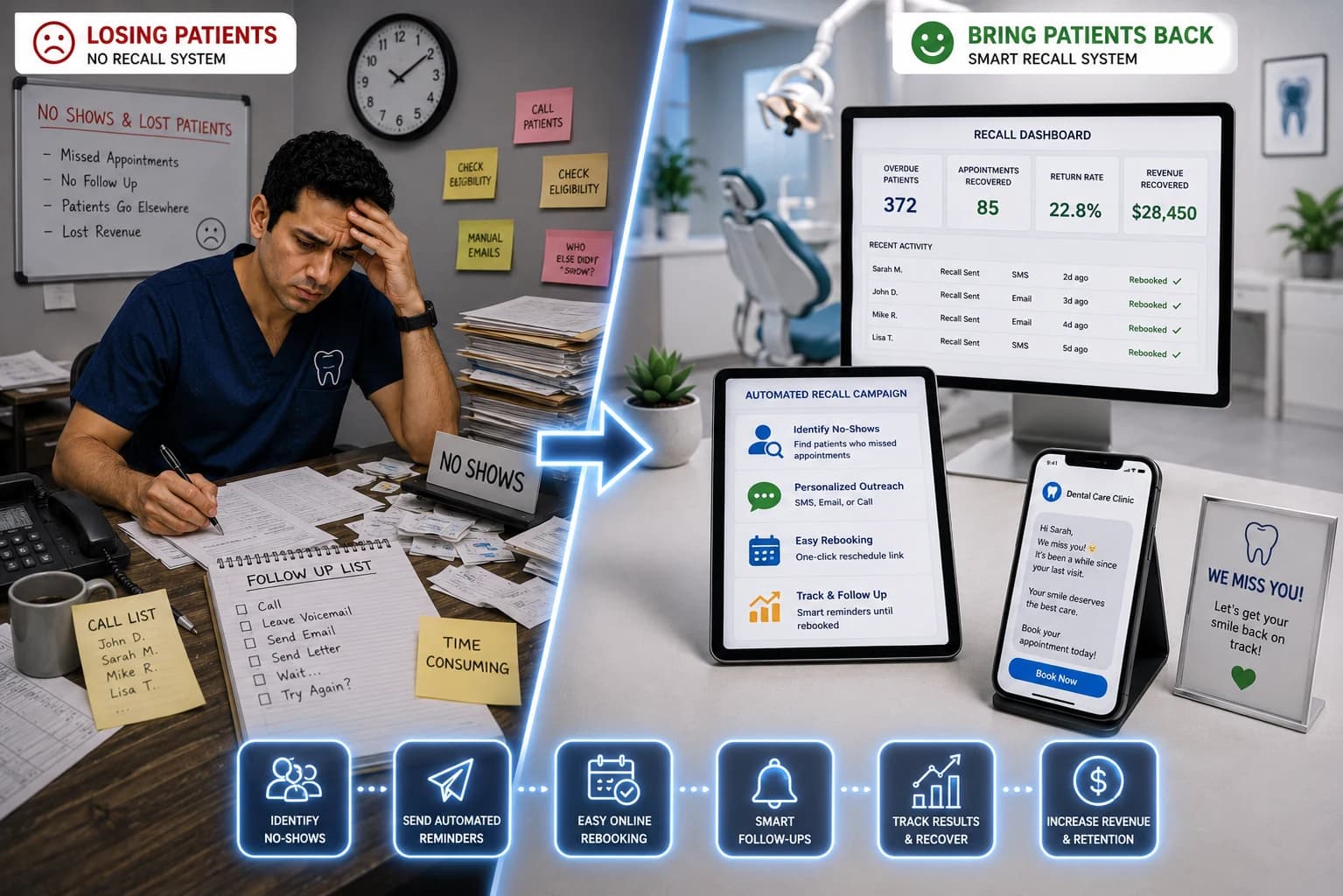
Patient Recall System: How to Bring Back Old Patients (No-Show Recovery)
Average recall rates sit at 55–65%; top practices hit 85%+. Build a recall system with pre-booking, WhatsApp outreach, and no-show recovery to reclaim lost hygiene revenue.
Quick answer
A dental patient recall system tracks overdue hygiene and treatment patients, then rebooks them before they drift away. Average practices recall 55–65% of patients; top performers reach 85–90% with checkout pre-booking plus automated WhatsApp reminders. Recovering 10% more recalls can add $40,000–$100,000 in annual hygiene production.
Your schedule looks full on Monday. By Thursday, three hygiene slots are empty — and 25–30% of your active patient file is overdue for recare right now (ADA Health Policy Institute practice benchmarks).
That is not a marketing problem. It is a recall system problem: patients who were never pre-booked, no-shows who were never re-contacted, and overdue lists sitting in a notebook nobody opens.
If you already understand how much no-shows cost, recall is the other half of the equation — bringing patients back before they become someone else's new patient.
Key takeaways
- Recall = rebooking overdue hygiene and maintenance patients; no-show recovery = rescheduling missed appointments within 24–48 hours
- Average recall rates sit at 55–65%; top practices reach 85–90% with checkout pre-booking plus automated outreach
- Pre-schedule the next hygiene visit before the patient leaves — this single step separates average from excellent recall
- Run a 30/60/90-day outreach sequence for overdue patients; escalate to a personal call at 90 days
- Contact no-shows within 24 hours via WhatsApp — same-day recovery beats phone tag by 2–3x
- Track hygiene reappointment rate weekly; aim for 85%+ at checkout, 75%+ recall return
Recall vs No-Show Recovery: Know the Difference
Many clinics treat these as one workflow. They are related but need different triggers.
| Workflow | Trigger | Goal | Best first action |
|---|---|---|---|
| Hygiene recall | Patient due for 6-month cleaning | Book before they go overdue | Pre-book at checkout |
| Treatment recall | Incomplete treatment plan item | Close open clinical work | Coordinator call at 48h |
| No-show recovery | Patient missed scheduled slot | Fill the gap or rebook | WhatsApp within 24h |
| Lapsed patient | No visit in 12–18 months | Win back or archive | Personal call + offer |
Confusing them leads to generic "please call us" messages that patients ignore. Each trigger needs a specific script and timeline.
2026 Recall Benchmarks: Where Does Your Clinic Stand?
Industry data shows a wide spread between average and top-performing recall (recall rate benchmarks; hygiene retention guide):
| Metric | Average practice | Top performer |
|---|---|---|
| Hygiene recall rate | 55–65% | 85–90%+ |
| Reappointment at checkout | 60–70% | 85–95% |
| Recare compliance | 65–75% | 85–95% |
| Annual patient attrition | 15–20% | Under 10% |
| Overdue patients (any time) | 25–30% | Under 15% |
Planet DDS 2025 data across 3,400 practices found 7.4% no-show and 15.5% advance cancellation rates — reminders alone cannot fix recall if patients never pre-book their next visit (industry retention data).
The revenue math
Each 10-point improvement in recall rate can add $40,000–$100,000 in annual hygiene production. For a three-chair clinic running four hygiene visits daily at $150–$250 per visit, recovering even two extra hygiene slots per week adds $15,600–$26,000 per year — without a single new marketing rupee.
Build Your Recall System in 5 Steps
Step 1: Define recall intervals
| Visit type | Standard interval | Overdue flag |
|---|---|---|
| Adult prophylaxis | 6 months | 7+ months since last visit |
| Periodontal maintenance | 3–4 months | Per dentist protocol |
| Pediatric recall | 6 months | 7+ months |
| Incomplete treatment | Per plan phase | 14+ days unscheduled |
Document intervals in your clinic SOP so every hygienist and receptionist uses the same rules.
Step 2: Pre-book at checkout (the #1 lever)
Patients are most motivated to book when they are still in the chair. Practices that pre-schedule at checkout typically achieve 80–90% recall rates versus 55–65% for those who say "we will call you later" (checkout pre-booking data).
Checkout script (30 seconds):
- "Your next cleaning is due in six months — I have Tuesday 10 AM or Thursday 3 PM. Which works better?"
- Book immediately in your system
- Send WhatsApp confirmation before they reach reception
If your appointment scheduling rules include buffer time and dentist-specific slots, pre-booking takes under a minute when the software shows real availability.
Step 3: Automate overdue outreach (30/60/90)
For patients who were not pre-booked or missed their recall window:
| Day overdue | Channel | Message focus |
|---|---|---|
| 30 | Friendly reminder + booking link | |
| 60 | "Still due for cleaning" + two time options | |
| 90 | Phone call | Personal outreach from front desk |
Automated WhatsApp reminders recover 15–25% of lapsed patients (18+ months overdue) within 30 days of the first outreach when contact data is accurate.
Step 4: No-show recovery within 24 hours
When a patient no-shows, the recovery clock starts immediately:
1. Same day: WhatsApp — "We missed you today. Tap here to pick a new time."
2. Day 2: Second message with two open slots
3. Day 3: Front-desk call for high-value patients or repeat offenders
4. Day 7: Move to overdue recall list if still unscheduled
Pair this with your waiting list so the empty slot gets filled even if the original patient never returns. Practices using waitlist backfill plus no-show outreach recover 30–50% more production than reminder-only clinics.
Step 5: Review weekly, not monthly
Pull these numbers every Monday:
| KPI | Target | Action if below |
|---|---|---|
| Hygiene reappointment rate | 85%+ | Train checkout script |
| Recall return rate | 75%+ | Tighten reminder sequence |
| Overdue patient count | Trending down | Increase 60/90-day outreach |
| No-show recovery (7-day) | 20%+ | Faster same-day WhatsApp |
Pakistan Clinic Context
Pakistani dental clinics face unique recall challenges: patients travel across cities, WhatsApp is the default channel (not email), and front-desk staff juggle walk-ins alongside scheduled patients.
What works locally:
- WhatsApp-first outreach — patients read messages within minutes; email recall fails
- Urdu/English messages — match the language patients used at registration
- Public booking links — let patients reschedule without calling during office hours
- Credit-based reminder budgets — track WhatsApp spend per clinic so outreach stays sustainable
Denzif ties patient records, appointment statuses, WhatsApp reminders, and online booking forms to one clinic dashboard — so overdue lists, no-show flags, and next-visit dates live in one place instead of three notebooks.
Common Recall Mistakes
| Mistake | Why it fails | Fix |
|---|---|---|
| "We will call you" at checkout | 40%+ never get called | Pre-book before patient stands up |
| Phone-only recall | Patients do not answer unknown numbers | WhatsApp first, call at 90 days |
| Monthly overdue review | List grows 30 patients per month | Weekly dashboard pull |
| Same message for all overdue | 6-month vs 18-month patients need different tone | Segment by months overdue |
| No no-show follow-up | Empty slot = lost forever | 24-hour WhatsApp recovery |
Recall System Tech Checklist
Before buying or configuring software, confirm your system can:
- Flag patients overdue by recall interval (hygiene, perio, treatment)
- Pre-book next visit at checkout with dentist and chair rules
- Send automated WhatsApp reminders with confirm/reschedule options
- Track no-show status and trigger recovery workflows
- Show overdue count on a dashboard your receptionist checks daily
- Export overdue lists for personal outreach campaigns
If your current tool cannot do three or more of these, recall will stay manual — and manual recall decays within weeks of staff turnover.
The Bottom Line
A dental recall system is not a marketing campaign. It is an operating rhythm: pre-book at checkout, automate overdue outreach, recover no-shows within 24 hours, and review KPIs weekly. Average practices recall 55–65% of patients; top performers hit 85–90% — and each 10-point gain can add $40,000–$100,000 in predictable hygiene revenue.
About Denzif
Denzif is cloud dental practice management for established small-to-mid clinics in Pakistan — patients, appointments, treatments, billing, inventory, WhatsApp reminders, and optional AI on Standard. Get custom PKR pricing or request a private walkthrough.
Frequently Asked Questions
A recall system identifies patients due for hygiene or follow-up treatment, contacts them on a schedule (30/60/90 days overdue), and books the next visit. It combines pre-booking at checkout, automated reminders, and staff outreach for lapsed patients who have not been seen in 12–18 months.
Ready to put this into practice?
Custom PKR pricing for established clinics. Private walkthrough after we confirm fit. Setup in about 15 minutes.